

Talking with Hanvit Sohn about Tradition vs Modern
- Dioni Tsokou

- May 27, 2023
- 4 min read

East Asia is becoming particularly popular in the 21st century, with China booming industrially, Japan becoming a tech mecca and South Korea conquering pop culture through cinema and music. Many young people choose to learn Asian languages or travel there for professional reasons. From religions and ideologies (Taoism and Buddhism), sports and hobbies (martial arts, meditation, yoga) to cuisine and aesthetics (Asian cooking and fashion) we can conclude that the modern Western world is deeply influenced by the East.
However, the aforementioned countries have gone through their own westernization many years ago, which means that their current way of living has changed from the traditions and culture that we now globally admire.
Through this article I hoped to learn how a South Korean citizen reintegrates all the secrets of his heritage into his everyday routine, facing all the conflicts that this entails and redefining what life means for the modern man.
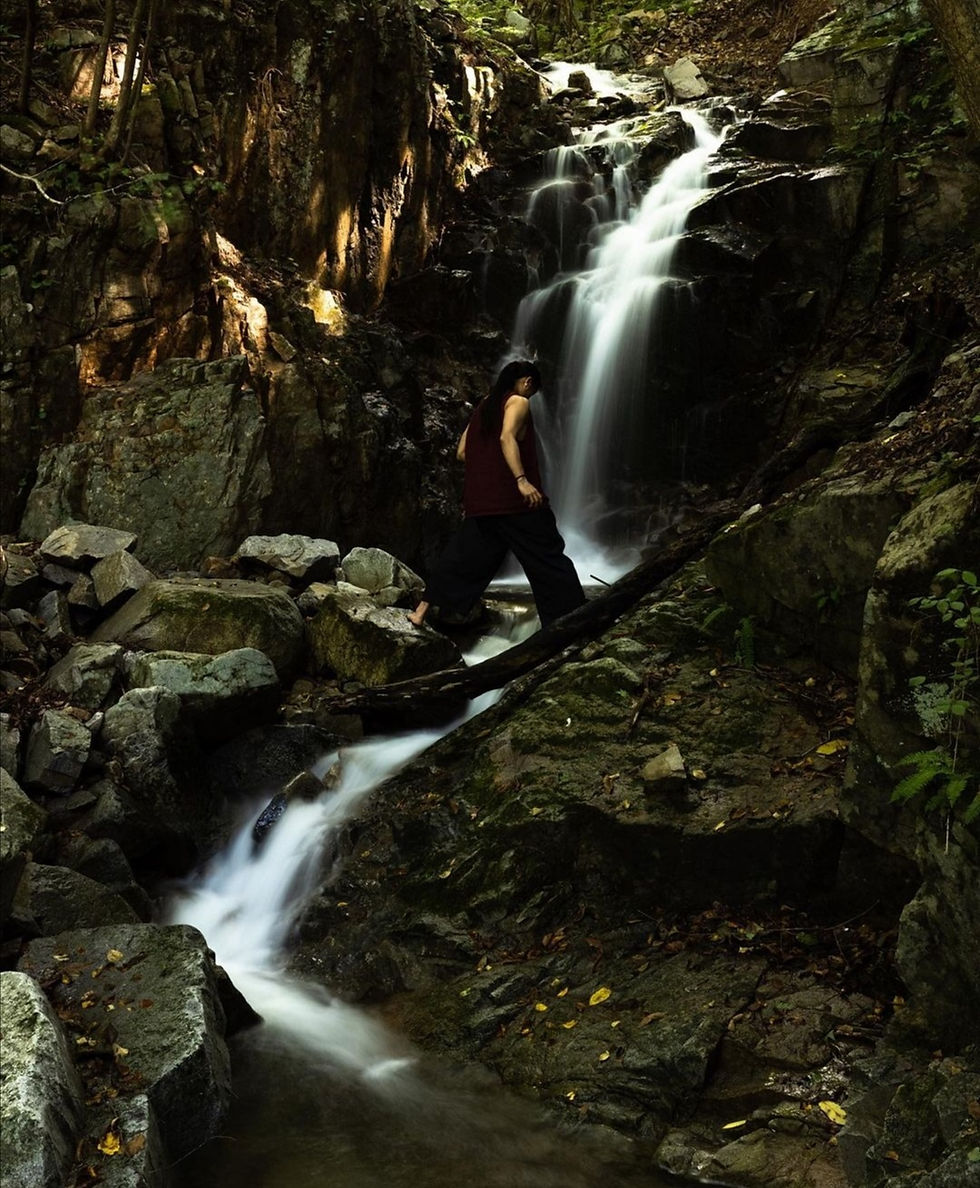
We start on a mountain in South Korea, in Hanvit Sohn's residence. We watch his routine, his habits, his clothing, his animals, his classic house, the tree-filled landscape that surrounds him.
He tells me about his childhood, as an ambitious kid in the Korean capital and in America, and how he changed his mind in his 20s, embarking on a deep soul-searching journey. His travels in nature lead him to leave the comforts of the city and live in the countryside. We see the difference immediately when he travels to the capital and the mountain peaks are replaced by skyscrapers.

He tells me how he was inspired by his mother who is an oriental painting artist, he shows how he learned to write with the old ideograms, how he trained in various martial arts and was immersed in Asian philosophy. He talks about his experience in isolation, about his faith in past lives and the ones to come, about the energy cycles of Yin Yang.
The impressive images of his life today and his calm physiognomy contrast with the turbulent past of a war-torn country. The need to belong, to know one’s roots and culture wasn’t as prioritized while the country recovered and adapted, he says. Now the big cities are no different from the western capitals.
And yet many can relate to Hanvit. Who doesn't want a house in the countryside, a break from the busy streets, the small apartment, the constant rush, the fast pace? Whether in jeans or in Hanbok, Hanvit remains a modern man facing these decisions. He needs to travel to the city for the essentials, use social media to promote his projects. Even when his ideology points to something higher than his nationality, he cannot help but comment on China's influence on his much smaller country.
At the same time, we observe the environment. Living here comes with lots of greenery, fresh air, sounds of running water, birds in summer and pure white snow in winter. It remains, however, a sacrifice. As demanding as it is to maintain life in the city, it is even more so there.

Questions arise. What is our perspective on the modern way of living, what changes do we need to make? How do we bridge the problems we all face as individuals with those that burden us as citizens of a society? How do we harness the positive elements of our culture and redefine the negative ones?
Who is Hanvit Sohn?

Hanvit is an artist from South Korea. His name means "the only light". He grew up in big cities, in Seoul until he was fourteen and then in North America, where he moved with his family.
He studied the culture of East Asia on his own, since such subjects were not taught in school. Their modern education system fails to impart the traditional teachings. After tough decades of colonization and war between the North and the South, Korea was destroyed and became one of the poorest countries in the world. Since then, the government has focused exclusively on economic development, where it has done wonders, but failed to preserve their roots and cultural authenticity, according to him.
For this reason, after his 20s, Hanvit felt the need to find his own truth, values and roots and began to study the culture of China, Japan and Korea. He studied philosophy, Buddhism and Taoism, trained in various types of Kungfu, oriental painting and poetry. While all three countries hold claims in these disciplines, he was not limited, since he does not strictly classify himself as Korean. He believes that this life is a short journey. He has seen himself in many past lives, he has been born in many different places. So, he thinks it’s only temporary that he happened to be born in Korea in this life.

He started traveling the world when he was 21, starting in Brazil. There he visited an island that made him fall in love with nature. He put aside the ambitions of his youth and appreciated the quiet against the pollution and chaos of the city.
He learned to write in ancient Hansi ideograms, which are no longer used. He prefers ancient scripts, because they can convey powerful and diverse meanings in a single ideogram.

Now he lives close to nature, but has not distanced himself from modern life. There were times when he found himself in total isolation, deep into the forest to train, but now he has adopted a hybrid lifestyle between the modern and the ancient. He takes advantage of new technology to create and share art, while enjoying the serenity of the mountain. This is how he has found balance and a routine that suits him.
He believes that the popularity of Eastern culture around the world is part of the cycle of energy, and it changes in the same way that seasons do. Western civilization has brought technologies that made the world more comfortable, but it has also brought many harmful elements to the Earth. And this is part of the cycle as well. A cycle that, according to him, is now chancing once more.

You can find out more about his work through his Instagram account: https://www.instagram.com/moojinhanvit/
And his Youtube channel:


Comments