

Zhang Yimou and The Curse of the Golden Flower
- Dioni Tsokou

- Jul 5, 2023
- 2 min read

Chrysanthemum
Waiting for autumn to come, eighth of the ninth month,
Once my flowers bloom, hundred flowers perishes.
Bursts of fragrance soars the skies as it penetrates Chang’an,
The entire city coated in golden armoury.
-Huang Chao
For those unfamiliar with Asian cinema, the name Zhang Yimou might not ring a bell. However, it would be a shame for a cinephile to miss out on the visual excellence provided by this particular director and his masterpiece films, which he has often fought to create against the regime of his country. We’ll discuss more about the artist himself and China's cinematic censorship system in a future article.
Today we will focus on one of his most famous movies, the Curse of the Golden Flower (2006), which he wrote and directed himself. It is a grand epic period drama, set during the Tang Dynasty. The plot derives from the play Thunderstorm, while the Chinese title is inspired by the last line of a poem by Huang Chao, who rebelled against the dynasty. And the reference to the golden flower (chrysanthemums) and the golden armor of the soldiers is evident throughout the film.


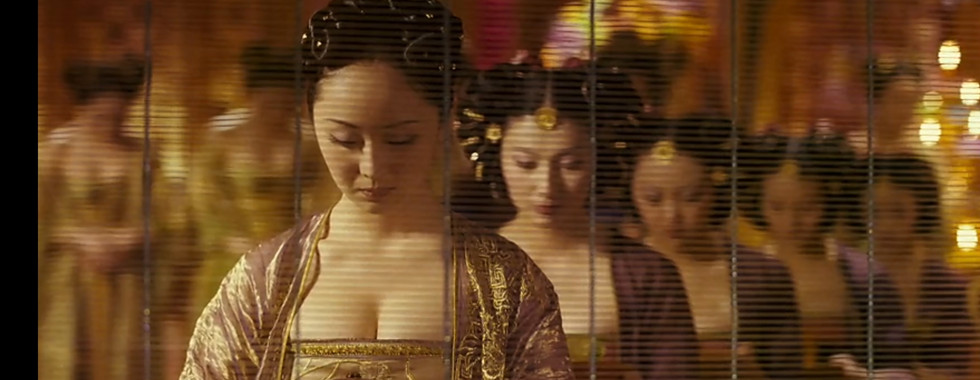








The story follows the members of the imperial family, scheming and fighting amongst themselves, drowning in the passions of their past and ultimately in their own blood. Romance, love, betrayal, Gordian family ties and power plays entrap the main characters in a complex dynamic that always manages to capture our attention, without exaggerating. All this is accompanied by the most impressive cinematic images, with deep red and gold frames that highlight all the richness of Chinese traditional aesthetics.
Zhang Yimou's artistic mastery, however, is not limited to large, impressive shots. It hides in every detail (recommending to be enjoyed in high resolution). Wherever the viewer's eye falls, he will find color, light, perfection. A suffocating perfection that weighs down the protagonists themselves, who give excellent performances. Also noteworthy is the use of music, which emphasizes the inner, emotional tension experienced by the characters of the story, in the depths of the palace and beyond their titles.
So, if you're at home, wondering what to watch, we highly recommend that you explore the work of this particular Chinese artist with us.


Comments